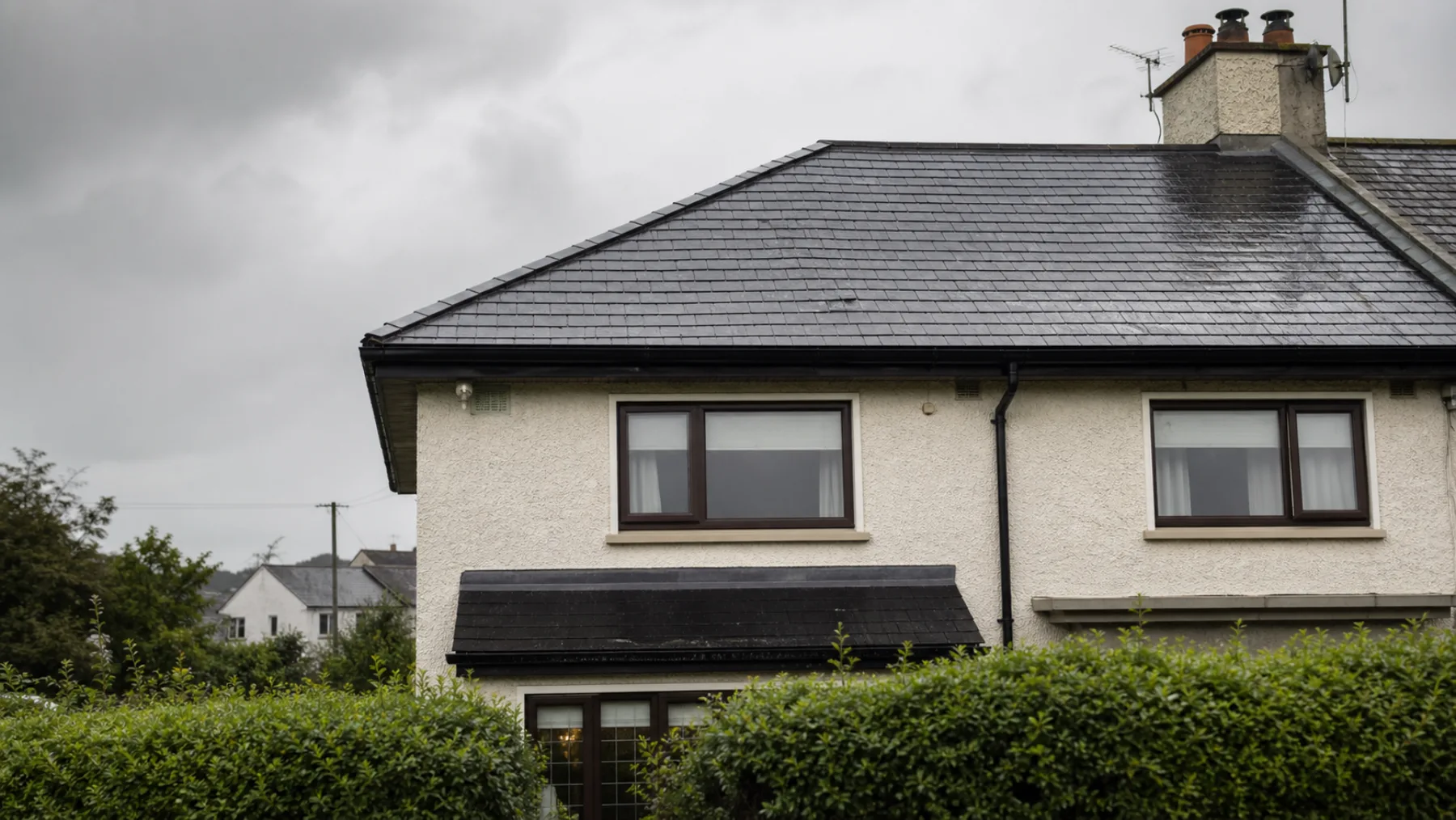
The short answer
If your roof is leaking, keep everyone clear of the wet area, treat wet electrical fittings as dangerous, contain water only from a safe position, move belongings and photograph what is happening. Do not go onto the roof. Call a roofer promptly, and call your insurer if a storm or another sudden event may have caused the damage.
A dripping ceiling does not tell you where the roof has failed. Water can enter beside a chimney, valley, vent or slipped slate, travel along felt or timber, and appear several metres away. Your immediate job is therefore damage control—not rooftop diagnosis.
The first 10 minutes: make the area safe
- Keep people and pets out. A saturated ceiling can shed plaster or, in severe cases, partially collapse.
- Look for electrical risk without touching anything wet. If water is entering a light fitting, socket, alarm, appliance or consumer-unit area, do not touch the fitting or stand in water. Leave the area and contact a registered electrician or the emergency services where danger is immediate.
- Move portable belongings. Start with electronics, documents, soft furnishings and anything irreplaceable. Do not work directly beneath a bowed ceiling.
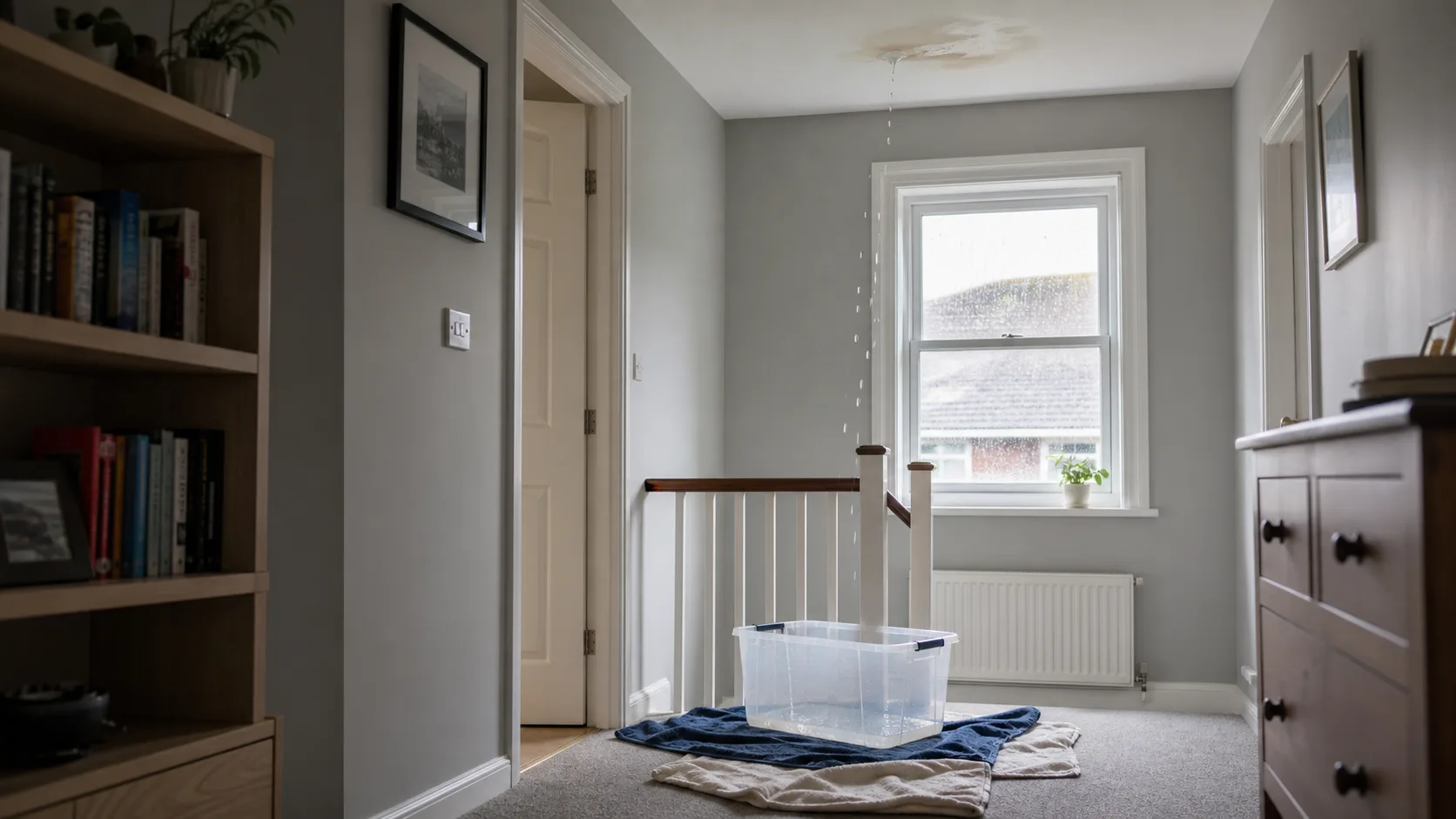
- Place a wide container under a straightforward drip. Put towels or plastic beneath it to protect the floor and reduce splashing.
- Note the time and weather. Record whether the leak began during wind-driven rain, after prolonged rain, during thawing frost, or with no rain at all.
Ireland’s Health and Safety Authority describes roof work and ladder use as work at height and says it should be planned, risk-assessed and carried out by competent people using appropriate equipment. Its guidance is aimed at work activities, but the hazard is just as real at home: a wet pitched roof is not a safe DIY inspection platform. See the HSA work-at-height guidance.
How to limit water damage safely
Use several smaller containers if a drip is spreading. Empty them before they become difficult to carry, and keep a clear walking route. Lift rugs and place furniture legs on waterproof pads. If water is tracking down a wall, protect the floor rather than fixing plastic tightly to the wall; trapped water can simply migrate elsewhere.
If you can inspect the attic without climbing, walking on joists or approaching electrics, look only from the boarded access area with a torch. Do not step onto insulation or plasterboard—it may not support your weight. A photograph from the hatch can still show wet rafters, staining or daylight. Close the hatch when finished to keep children and pets away.
Avoid improvised external fixes during rain. Tarpaulins, sealants and replacement slates all require safe access and an understanding of how the roof sheds water. A patch in the wrong place can conceal the route, trap moisture or make a professional repair harder.
What usually causes a roof leak?
The timing and position narrow the possibilities, but only an inspection can confirm the cause. Common patterns include:
- Leak during wind-driven rain: slipped or cracked slate/tile, failed ridge or verge detail, damaged underlay, or rain driven beneath an otherwise serviceable covering.
- Staining beside a chimney: split, lifted or poorly detailed lead flashing; defective pointing; cracked chimney haunching; or water entering through porous masonry.
- Leak below a roof valley: debris blockage, corrosion, a split lining or a failure where slates meet the valley.
- Leak near an extension or flat roof: failed membrane joint, outlet blockage, upstand defect or movement where the new and old structures meet.
- Damp without rainfall: condensation, plumbing or a cold-water tank issue may be more likely than rain penetration.
- Overflow at eaves: blocked or misaligned guttering can wet fascia, soffit and walls, although it may not be a roof-covering failure.
Condensation deserves special attention. Warm moist air can pass into a cold attic and condense on rafters, trusses or roof sheathing. SEAI warns that inadequate ventilation raises the risk of moisture defects and that insulation must not block intended airflow. If widespread droplets appear under the roof on a cold morning, especially without rain, ask the inspector to assess ventilation and indoor moisture rather than assuming there is a hole. Read SEAI’s explanation of attic condensation.
Photograph the damage before cleaning up
Once the area is safe, take wide photographs of the room, close-ups of staining and damaged items, and a short video showing active dripping. Photograph the outside from ground level if damage is visible. Save weather-warning screenshots, the date and time, receipts for emergency work, and all written communication.
Contact your insurer promptly and follow its instructions before authorising non-emergency permanent work. The CCPC says Irish buildings policies commonly cover events such as storm or flood subject to conditions, but usually do not cover wear and tear. That distinction matters: a storm may expose an already deteriorated roof, and the final decision depends on the wording and evidence. The CCPC home-insurance guide explains typical cover and exclusions.
What to tell the roofer—and what to ask
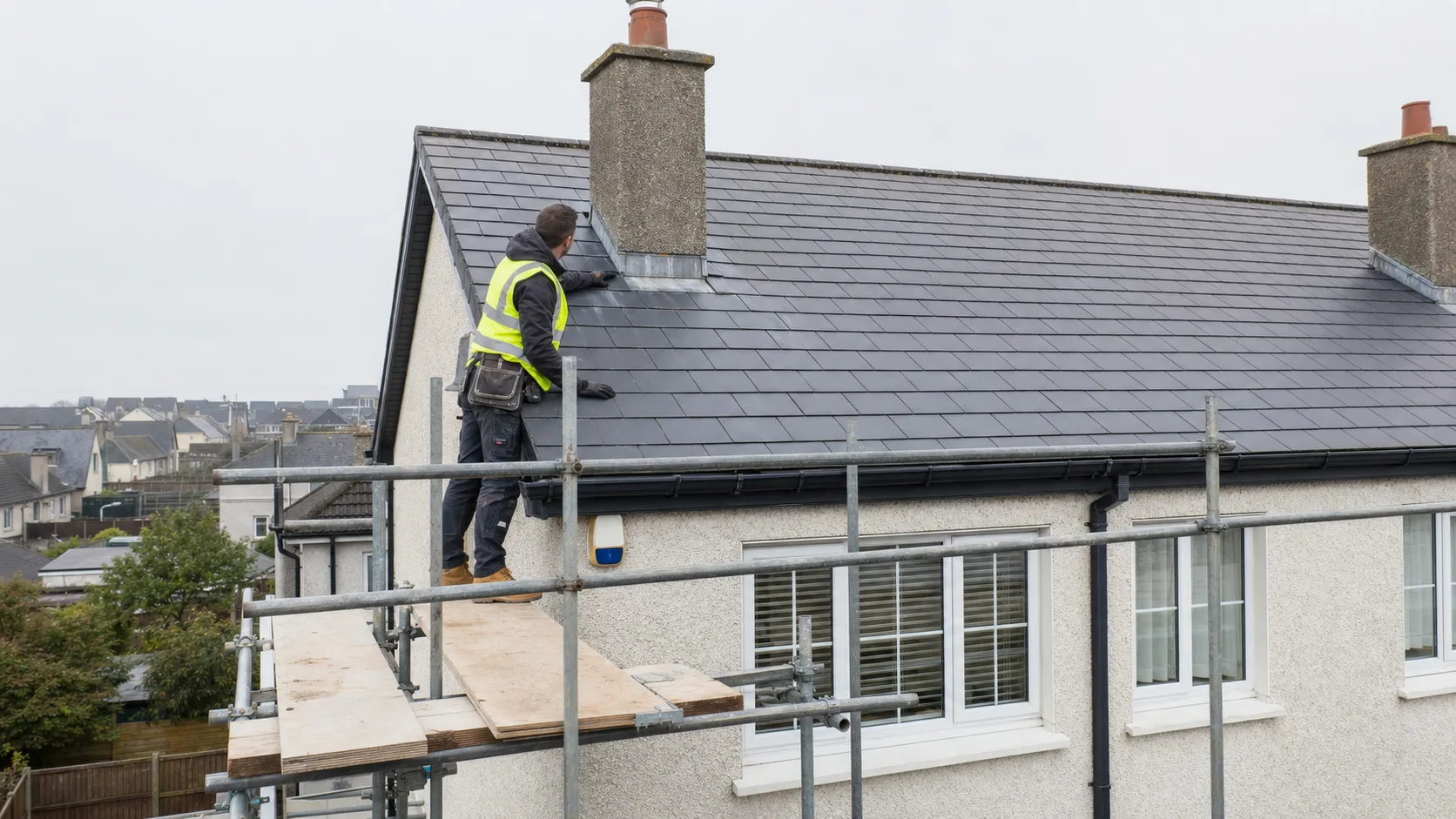
Share the property type, leak location, when it started, whether it changes with wind direction, any previous repairs, and your ground-level photos. Mention solar panels, roof windows, attic conversions and difficult rear access. Those details help the contractor bring suitable equipment and decide whether temporary weatherproofing is possible.
Ask the roofer to explain:
- the likely entry point and evidence supporting that diagnosis;
- whether the proposal is temporary weathering or a permanent repair;
- what access equipment is included and who is responsible for it;
- which slates, tiles, membrane, flashing or timber will be replaced;
- whether surrounding areas were inspected for related deterioration;
- the price, VAT status, start timing, warranty and waste removal in writing;
- proof of public liability insurance and experience with your roof type.
Be cautious if someone declares the whole roof defective from the doorstep, pressures you for a large cash payment, cannot describe the defect, or proposes coating everything with sealant. Equally, a quote that ignores access may not be comparable with one that includes scaffold or a platform. HSA’s homeowner construction guidance recommends making a reasonable assessment of contractor competence.
What a lasting repair looks like
A durable repair addresses the failed detail and any damage beneath it. Replacing a broken slate may be enough where surrounding materials are sound. A flashing leak may require lifting adjacent slates and renewing the detail rather than smearing exposed edges. A failed valley may need a larger strip-back because the waterproof layer continues beneath the covering.
After repair, ask for before-and-after photographs and a clear invoice describing the location and materials. Allow internal construction to dry before redecorating; painting too early can trap residual moisture and make it difficult to tell whether staining is old or recurring. If insulation is saturated, the contractor should advise whether it can dry or needs replacement.
Monitor the area during the next comparable rainfall. A light moisture mark can remain after the source is fixed, so judge recurrence by fresh dampness or a moisture reading rather than colour alone.
Frequently asked questions
Is a leaking roof always an emergency?
No, but active water ingress needs prompt attention. Treat it as urgent where water meets electrics, the ceiling changes shape, water enters rapidly, or materials are falling. A small stable drip still deserves early inspection because repeated wetting can damage plaster, insulation and timber.
Can I stop a roof leak from inside?
You can usually contain water and protect belongings, but most rain-entry defects require an external repair. Do not walk on unboarded attic areas or attempt to seal a defect you cannot safely reach and positively identify.
How quickly should a roofer attend?
Safety-critical cases should be triaged immediately. During widespread storms, permanent work may have to wait for safe conditions; a contractor may first assess, photograph and weatherproof the area. Ask for a specific next step rather than assuming an emergency visit includes final repair.
Does a ceiling stain mean the roof is still leaking?
Not necessarily. Old stains can remain after materials dry, and trapped water may drip for a time after rain stops. Mark the stain edge lightly in pencil, take a dated photo and monitor for expansion. A moisture meter gives better evidence than colour alone.
Who should inspect damp when it has not rained?
Start with the pattern: plumbing above the area suggests a plumber; widespread attic moisture suggests ventilation or condensation; local damp beneath a roof detail suggests a roofer. When uncertain, choose someone willing to diagnose before selling a repair.
Sources and review basis
This guide was reviewed against homeowner and safety information from the Health and Safety Authority, Competition and Consumer Protection Commission, and Sustainable Energy Authority of Ireland. Insurance policies and individual roof constructions vary; this is general guidance, not a remote diagnosis.
Need a roof leak assessed?
Tell us what is happening and compare a clear, property-specific quote from a roofer serving your area.
Request a roof repair quote →